Slot reviews
[Slot review] Thunderstruck II — Microgaming
The only entry in the series with a different RTP. A look at the switch from 9 lines to 243 ways, and at what the 96.65% figure — set against three siblings at 96.10% — does and does not tell you.
Overview
Thunderstruck II is the second title in the series, released by Microgaming on 5 November 2013. The format is 5 reels and 243 ways, the published RTP is 96.65%, volatility is High, and the bet range is 0.3 to 60. It arrived a little over a year and a half after the original Thunderstruck (22 March 2012).
Of the four series titles, only this one has a different RTP. The original, Wild Lightning and Stormchaser are all at 96.10%; this one is at 96.65%. That gap, and the change of format, are what this review is about.
Layout and rules
243 ways drops fixed lines and counts every route where matching symbols run across adjacent reels from the left. 243 is 3 to the 5th power, which fits a layout of five reels with three positions each. The hub does not list the row count separately, so this arithmetic only confirms consistency with the published label.
Compared with the original's nine lines, the number of counting routes grows a lot, but route count is not the same thing as win frequency or payout size. Those are set by the whole paytable, and this game's paytable, feature structure and free-spin conditions are not published. In this catalogue, Burning Desire — released 5 December 2012 — was already 5 reels and 243 ways, so the format itself did not debut here.
Free demo
See the screen you're reading about
The official demo published by Microgaming. It runs on play money only; no real funds are involved.
If the demo does not appear, check your browser's frame-blocking settings.
How to read the 0.55-point gap
The gap between 96.65% and 96.10% is 0.55 points. RTP is a theoretical return over a very long run of play, so a gap this size is not something a single session or a single day would make visible. It tells you the studio set the maths slightly differently within the same volatility band — not that one game 'pays better'.
The bet range differs from the original too. Where the original runs 0.09 to 90, this one runs 0.3 to 60: a higher minimum and a lower maximum. The specification confirms only that the published range narrowed, not why.
Max win is blank in the hub. Since that holds for all four series titles, having the highest RTP gives no basis for saying this entry also has the highest cap.
Presentation
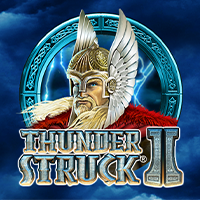
The cover redraws the original's winged-helmet figure with more depth. A red fur cloak covers the shoulders, and behind it sit a blue ring carved with runes and a spray of lightning. The title lettering has turned into metallic stone. Seen next to the original's flat composition, the change in production over a year and a half is immediate.
The demo is embedded on this page. The rules screen shows how many rows the 243-ways label actually draws and how the paytable is laid out.
Strengths
- The only series entry with a different RTP, which shows a maths difference within one family
- The 243-ways label is arithmetically consistent with a five-reel layout
- RTP, volatility, bet range and format are all published
Weak points
- Max win is unpublished, so there is no telling whether the RTP gap extends to the cap
- The row count is not published separately
- The paytable, feature structure and free-spin conditions are not published
Verdict
Thunderstruck II moved the series from lines to ways and is the only entry whose published RTP left the reference point. Read those 0.55 points as a record that the model was set differently, not as a forecast of outcomes.